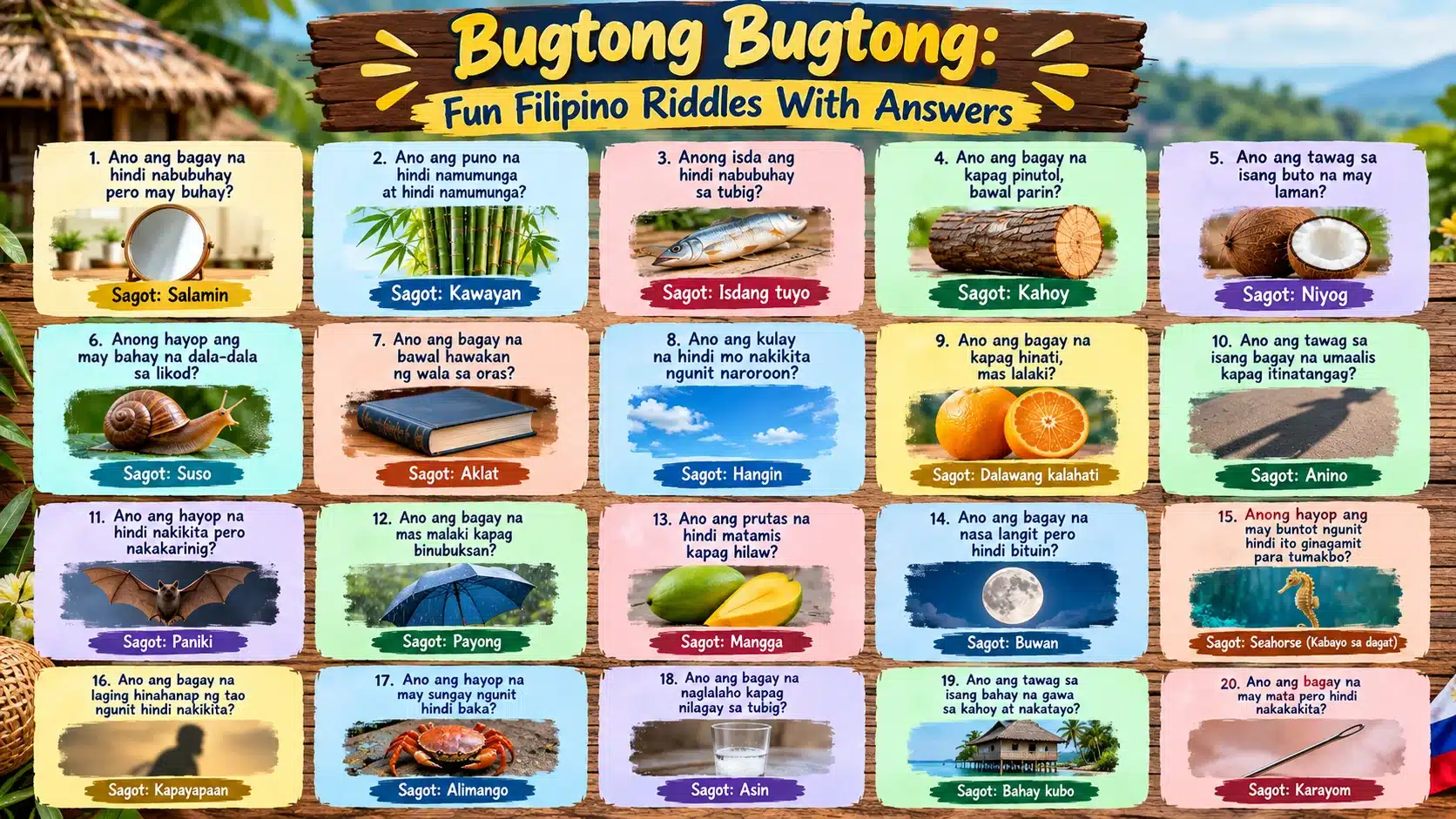
Riddles have a special place in Filipino culture. They bring people together, test quick thinking, and create plenty of laughs. Bugtong Bugtong remains a popular form of wordplay that children, parents, students, and friends can enjoy together.
These riddles often use simple objects, animals, places, or everyday situations. The question sounds confusing at first, but the answer usually hides behind a clever clue. Bugtong Bugtong can turn an ordinary conversation into a fun little challenge.
What Makes Filipino Riddles So Enjoyable?
Filipino riddles use creative descriptions instead of giving direct clues. A may describe an object by its shape, color, movement, or purpose. This style encourages readers to think beyond the obvious answer.
Bugtong Bugtong also reflects Filipino creativity and humor. Many riddles use rhymes or playful words that make them easier to remember. Children often learn them at home or school, while adults may remember riddles from their childhood.
Another great thing about riddles involves their simplicity. You do not need special equipment or a complicated game setup. You only need a question, a little imagination, and someone ready to guess.
Easy Bugtong With Answers
The following riddles work well for children, students, family gatherings, and casual games. Read each question first and give yourself a few seconds to guess before checking the answer.
Easy Filipino Bugtong
- Maliit na bahay, puno ng mga tao.
Sagot: Bahay ng langgam - May katawan ngunit walang buhay, may ulo ngunit walang isip.
Sagot: Posporo - May ngipin pero hindi kumakain.
Sagot: Suklay - Dalawang magkapatid, laging magkasama ngunit hindi nagkikita.
Sagot: Mata - May kamay ngunit walang braso.
Sagot: Orasan - May paa ngunit hindi naglalakad.
Sagot: Mesa - May pakpak ngunit hindi ibon.
Sagot: Bentilador - Kapag binuksan, may laman; kapag isinara, wala kang makita.
Sagot: Libro - Maliit na bilog, nagbibigay ng liwanag sa dilim.
Sagot: Bumbilya - Mahaba at payat, ginagamit sa pagsulat.
Sagot: Lapis
Mga Bugtong Tungkol sa Kalikasan
Ang Bugtong Bugtong tungkol sa kalikasan ay madaling maunawaan dahil pamilyar ang mga bagay na tinutukoy. Maaari itong gamitin sa mga batang nagsisimula pa lamang matuto ng mga bugtong.
- Bilog sa langit, nagbibigay liwanag sa araw.
Sagot: Araw - Lumilitaw sa gabi at naglalaho sa umaga.
Sagot: Buwan - Maraming magkakapatid na kumikislap sa gabi.
Sagot: Mga bituin - Walang paa ngunit tumatakbo sa ilog.
Sagot: Tubig - Bumaba mula sa langit at nagpapabasa sa lupa.
Sagot: Ulan - Matangkad na halaman na maraming dahon.
Sagot: Puno - May ugat, tangkay, dahon, at bulaklak.
Sagot: Halaman - Puting bagay sa langit na minsan ay nagiging kulay abo.
Sagot: Ulap - Dumadagundong kapag may malakas na ulan.
Sagot: Kulog - Mabilis na liwanag na nakikita sa langit kapag may bagyo.
Sagot: Kidlat
Mga Nakakatawang Bugtong
Mas nagiging masaya ang Bugtong Bugtong kapag may kaunting biro. Ang ganitong tanong ay puwedeng gamitin sa mga laro kasama ang pamilya at mga kaibigan.
- Ano ang may ulo at buntot pero walang katawan?
Sagot: Barya - Ano ang laging nasa harap mo pero hindi mo makita?
Sagot: Kinabukasan - Ano ang tumataas pero hindi bumababa?
Sagot: Edad - Ano ang may leeg pero walang ulo?
Sagot: Bote - Ano ang may bibig pero hindi nagsasalita?
Sagot: Banga - Ano ang may mata pero hindi nakakakita?
Sagot: Karayom - Ano ang may tainga pero hindi nakakarinig?
Sagot: Tasa - Ano ang may dila pero hindi nagsasalita?
Sagot: Sapatos - Ano ang may korona pero hindi hari?
Sagot: Pinya - Ano ang may balat ngunit walang laman sa loob kapag binalatan?
Sagot: Sibuyas
Mga Bugtong Para sa mga Bata
Ang Bugtong Bugtong ay magandang activity para sa mga bata dahil pinagsasama nito ang laro at pagkatuto. Pumili ng simpleng tanong at bigyan ang bata ng sapat na oras upang mag-isip.
- Ginagamit sa pagsusulat at may tinta.
Sagot: Bolpen - Ginagamit sa pagbubura ng maling sulat.
Sagot: Pambura - Lalagyan ng tubig na ginagamit sa pag-inom.
Sagot: Baso - Ginagamit upang makita ang sarili.
Sagot: Salamin - Isinusuot sa paa kapag naglalakad.
Sagot: Sapatos - Isinusuot sa ulo upang protektahan ito.
Sagot: Sombrero - Ginagamit sa pagluluto at may hawakan.
Sagot: Sandok - Malamig na pagkain na paborito ng maraming bata.
Sagot: Sorbetes - May dalawang gulong at pinapadyak upang umandar.
Sagot: Bisikleta - Sasakyang tumatakbo sa riles.
Sagot: Tren
Mas Mahihirap na Bugtong
Kung gusto mo ng mas malaking hamon, subukan ang mga sumusunod. Ang Bugtong Bugtong na may mas malalim na pahiwatig ay maaaring magbigay ng mas masayang paligsahan.
- Hindi tao, hindi hayop, ngunit may ulo at paa.
Sagot: Kama - Kapag mas marami kang kinukuha, mas marami ang naiiwan.
Sagot: Yapak - May bahay ngunit walang pinto at bintana.
Sagot: Itlog - Kapag pinutol mo, lalo itong humahaba.
Sagot: Kuwento - May apat na paa ngunit hindi makalakad.
Sagot: Silya - Hindi mo mahawakan ngunit nararamdaman mo.
Sagot: Hangin - Lumalabas kapag madilim at nawawala kapag maliwanag.
Sagot: Anino - May maraming pahina ngunit hindi puno.
Sagot: Aklat - Kapag ginagamit mo ako, lalo akong umiikli.
Sagot: Kandila - Hindi mo nakikita ngunit maaari mong marinig.
Sagot: Tunog
Why Children Can Learn From Riddles
Riddles offer more than simple entertainment. They encourage children to listen carefully and understand clues. A child must connect different ideas before choosing an answer.
Bugtong Bugtong can also help children develop vocabulary. When children hear unfamiliar words, they can learn their meanings through context. Teachers can use simple riddles as a fun activity during classroom lessons.
Parents can also use riddles during family time. A short game can give children a break from screens and encourage everyone to talk and laugh together.
Riddles for Family and Friends
A good does not need to feel difficult. In fact, easy questions often create the most fun because everyone can join the game. You can ask one during dinner, a family gathering, or a road trip.
Bugtong Bugtong also works well for social activities. Friends can create teams and take turns answering. You can even give one point for every correct answer and keep a simple score.
Try changing the difficulty based on the players. Young children may enjoy riddles about animals, food, toys, and school items. Older players may prefer riddles that use wordplay or double meanings.
How to Make Your Own Filipino Riddle
Creating a can become another fun activity. Start with an everyday object such as a spoon, chair, pencil, shoe, or phone. Think about its shape, use, color, or special features.
Next, describe the object without saying its name. Keep the clue short and interesting. You can add rhymes if you want the to sound more playful.
For example, you could describe a pencil as something that has a body, becomes shorter with use, and helps people write. The answer becomes easier to guess when the clues point toward one clear object.
Why Bugtong Bugtong Remains Popular
The charm of Bugtong Bugtong comes from its simple idea. Someone asks a clever question, and another person tries to discover the answer. That small exchange creates curiosity and often leads to laughter.These riddles also connect generations. Parents can share riddles they learned as children, while younger family members can create new ones. This simple tradition keeps Filipino wordplay enjoyable for different age groups. Bugtong Bugtong can fit almost anywhere. You can use it in classrooms, family games, parties, online posts, or friendly competitions. The activity costs nothing, yet it can provide plenty of entertainment.
Frequently Asked Questions
What does Bugtong Bugtong mean?
Bugtong Bugtong refers to Filipino riddles that use clues, wordplay, and creative descriptions. The player must think carefully and identify the hidden answer.
Are Filipino riddles good for children?
Yes. Simple riddles can help children practice reading, listening, vocabulary, memory, and problem-solving. Adults should choose age-appropriate questions for younger children.
How can I make riddles more fun?
Ask players to guess before revealing the answer. You can also create teams, keep points, use a timer, or let players write their own riddles.
Can I use these riddles in a classroom?
Yes. Teachers can use riddles as warm-up activities, vocabulary exercises, or short group games. They can also ask students to create their own questions.
Why do riddles use unusual descriptions?
Unusual descriptions make players think in a different way. Instead of naming an object directly, the focuses on its features or uses.
Final Thoughts
Bugtong Bugtong offers a simple way to enjoy Filipino language, creativity, and humor. These riddles can challenge the mind while bringing families, friends, and classmates together. The best riddles do not need complicated words. A short question with a clever clue can create curiosity and plenty of smiles. Whether you use them at home, in school, or during a gathering, Filipino riddles remain a fun way to think, learn, and connect with others.